The largest overland migration on Earth. Here's our complete guide to timing, location, and how to experience it.
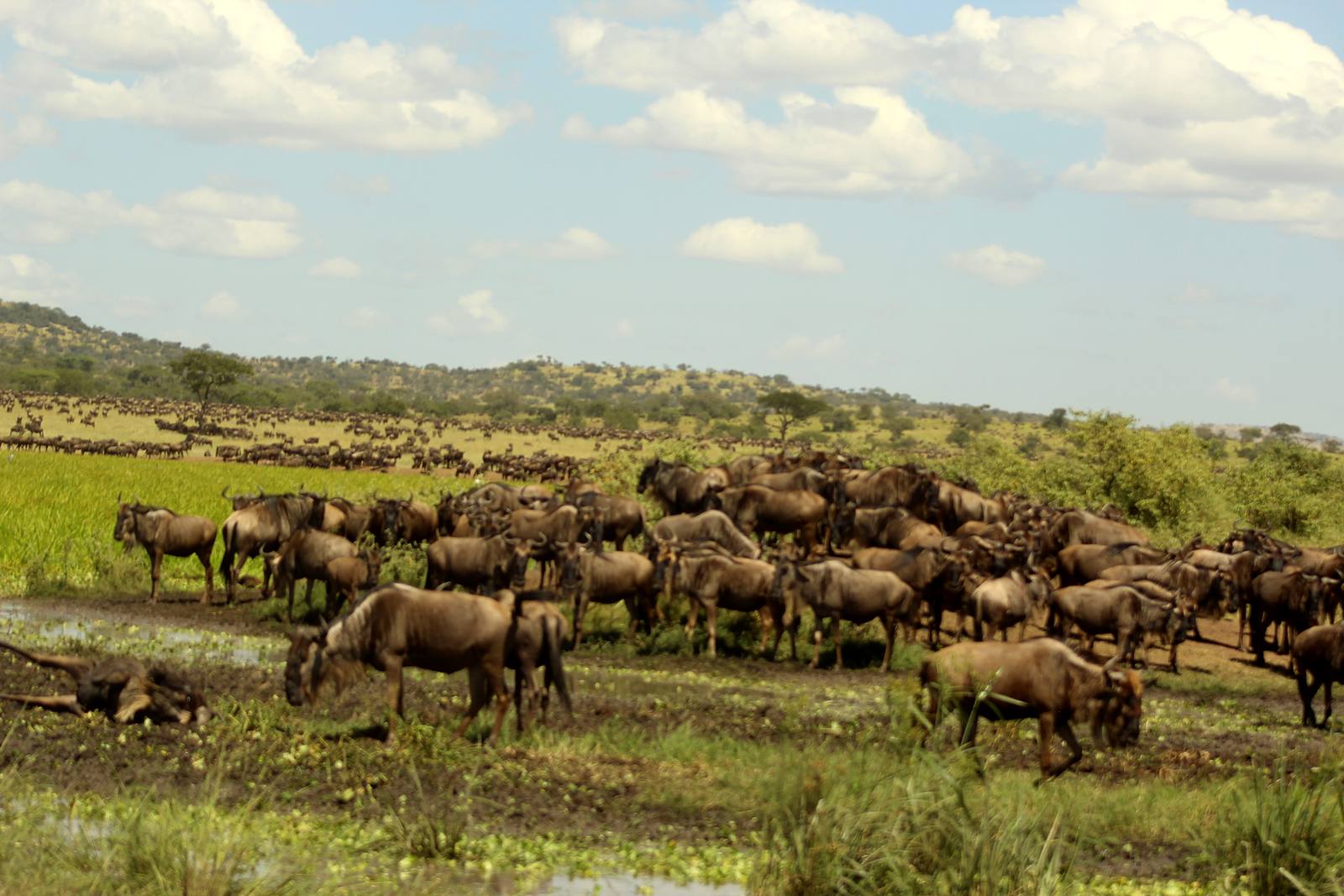
The Great Migration is one of nature's most spectacular events. Over 1.5 million wildebeest, accompanied by hundreds of thousands of zebras and gazelles, move in a continuous cycle across the Serengeti-Mara ecosystem.
The migration follows a roughly circular pattern, but the exact timing varies each year depending on rainfall. Understanding the cycle helps you plan your visit.
January to March: The herds are in the southern Serengeti and Ndutu area for calving season. Over 8,000 calves are born each day. This is a dramatic time as predators follow the herds.
April to May: The herds start moving northwest as the rains end. This is the green season with lush landscapes and fewer tourists.
June to July: The herds gather in the western Serengeti and begin crossing the Grumeti River. This is the start of the dramatic river crossings.
August to October: The herds are in the northern Serengeti, crossing the Mara River. This is the most famous and dramatic part of the migration, with crocodiles waiting in the river.
November to December: The herds move southward through the Serengeti, completing the cycle.